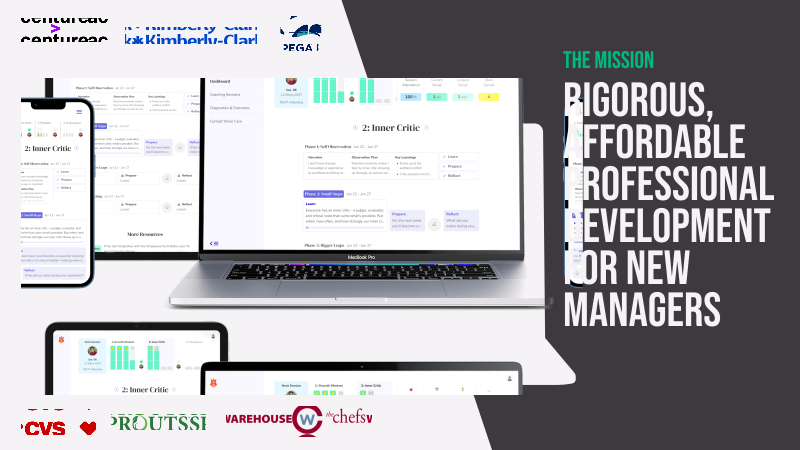

Wiser Managers is an AI-enabled professional development product designed to help new managers learn & embody critical leadership skills.
CVS
»
Pegasystems
»
Sprouts
»
Kimberly-Clark
»
Accenture
»
Chefs' Warehouse
»
CVS » Pegasystems » Sprouts » Kimberly-Clark » Accenture » Chefs' Warehouse »
Background:
This project began in 2020 as content click-through on a no-code web platform.
Over the next six years we grew it into a robust personalized development journey that leveraged both AI and human coaching to help individuals grow their self-awareness, confidence, and leadership capacities by identifying and reframing the narratives that had been holding them back, ultimately translating new perspectives into permanent behavior change.
Role:
UX Designer (part time) → Senior UX Designer (part time) → Product Lead (full time)
I started the project as a contract UX Designer, receiving high-level requirements for new pages that needed to be created. However, over the next 2-3 years, I shifted into a Senior UX role and took on more product-thinking and prompt engineering, partnering closely with our tech lead and CEO. For the last 6 months I shifted into a product lead role, driving the roadmap, upskilling the wider program management team, and functioning as the SME on client calls.
Core UX Considerations:
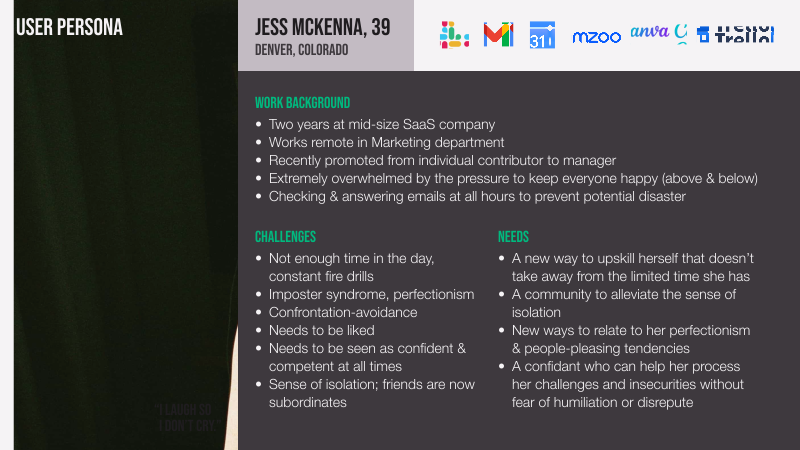
☆ Many new managers face imposter syndrome & lack workplace connections where it feels safe to express their concerns, challenges, and insecurities (consistently hiding their deficits & limiting their potential). The learning platform needed to be a place that felt friendly and low-stakes so participants would feel comfortable being more honest than typically feels safe— a coaching space rather than a performance-review space.
☆ Today’s managers are incredibly busy, so providing a simple, efficient UX was critical in supporting their developmental work— we needed to avoid overwhelm and over-complication at all costs.
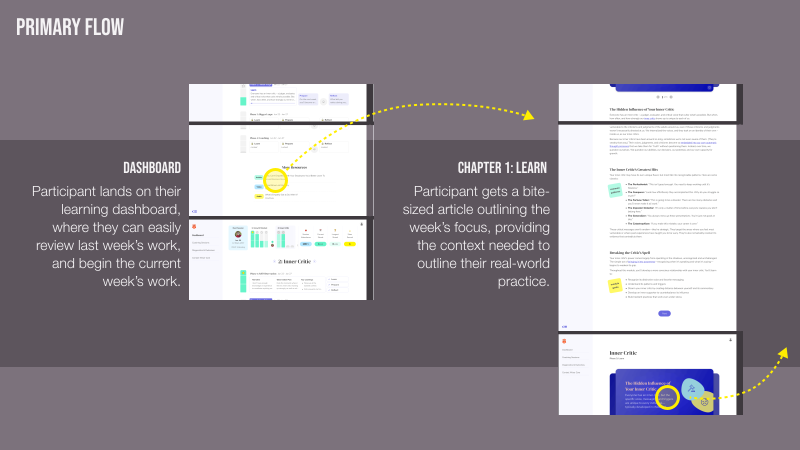
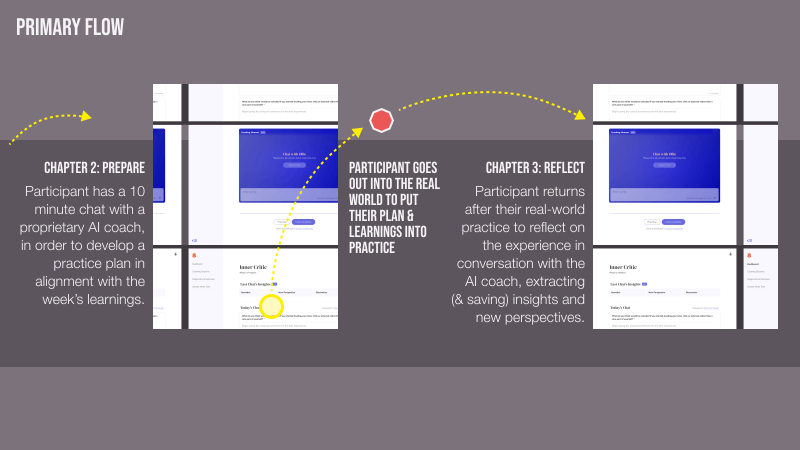
☆ Humans need to practice new skills, not just learn about them. In this way, the goal was never for participants to spend lots of time on the platform, rather the goal was to keep them coming back weekly in small doses and ensure those small doses adequately prepared them to try new behaviors in the flow of work, and then reflect on the experience in order to extract new insights and unlock new perspectives.
Metrics of Success*
* based on all user data Jan 2025 - Apr 2026
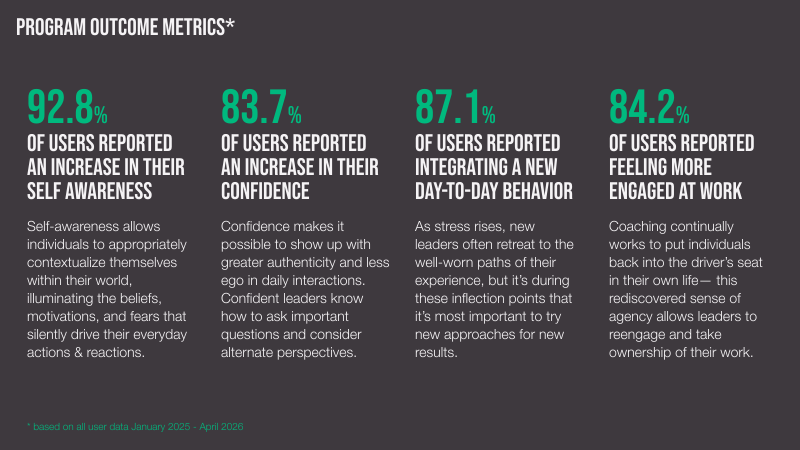
92.8% of users increased their self awareness.
92.8% of users
increased their self-awareness.
Self-awareness allows individuals to appropriately contextualize themselves within their world, illuminating the beliefs, motivations, and fears that silently drive their everyday actions & reactions.
83.7% of users increased their confidence.
Confidence makes it possible to show up with greater authenticity and less ego in daily interactions. Confident leaders know how to ask important questions and consider alternate perspectives.
87.1% of users integrated a new behavior.
83.7% of users
As stress rises, new leaders often retreat to the well-worn paths of their experience, but it’s during these inflection points that it’s most important to try new approaches for new results.
increased their confidence.
84.2% of users became more engaged at work.
Coaching continually works to put individuals back into the driver’s seat in their own life— this rediscovered sense of agency allows leaders to reengage and take ownership of their work.
87.1% of users
integrated a new behavior.
84.2% of users
became more engaged at work.
Learning Journey Overview
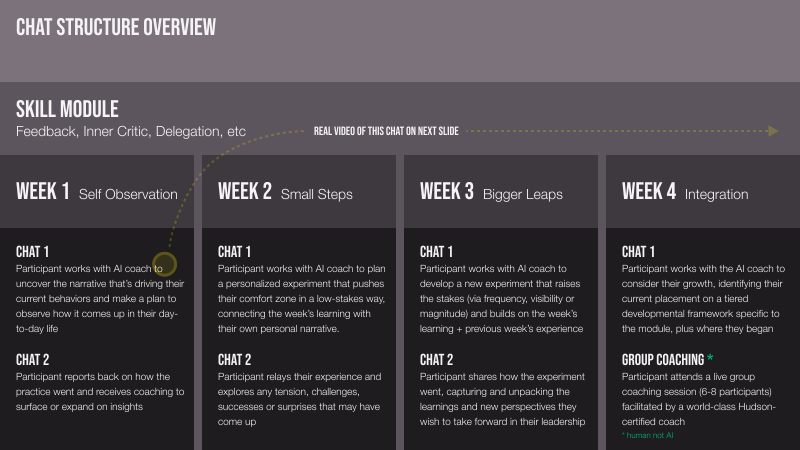
Wiser Managers is a six-month manager development program, focused on coach-guided behavior change across key leadership skills.
The learning journey follows Hudson’s behavior change model. It begins with self-observation (“change nothing— just tune into your current thinking and behaviors”) and then leverages that newfound self-awareness as a foundation on top of which to build new behaviors. AI chats with Ollie helped participants design meaningful experiments, and then unpack the experiment’s outcomes, extracting new perspectives in support of sustained change.
Product System
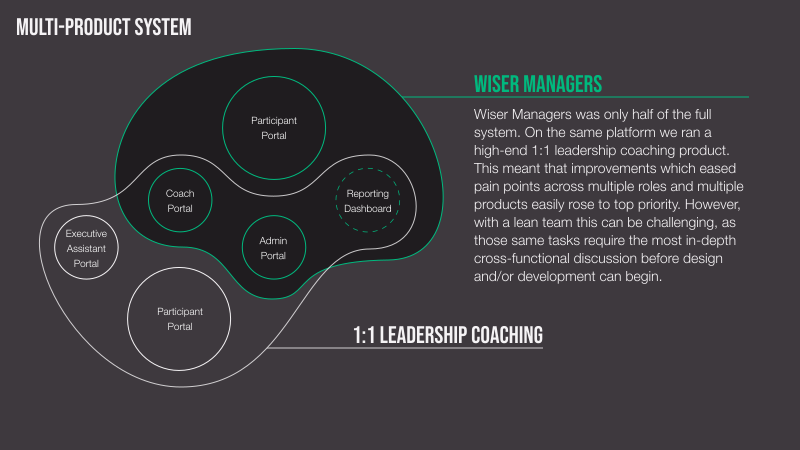
Decision-making in service of multiple roles across multiple products
Running a multi-product system with a lean team requires a constant assessment of high-value vs. low-value improvements, mapped to FE & BE dev bandwidth. Improvements that ease pain points for multiple roles across multiple products easily rise to top priority, but ultimately require the most in-depth cross-functional discussion before design and/or development can begin to ensure the solution is cohesive and comprehensive.
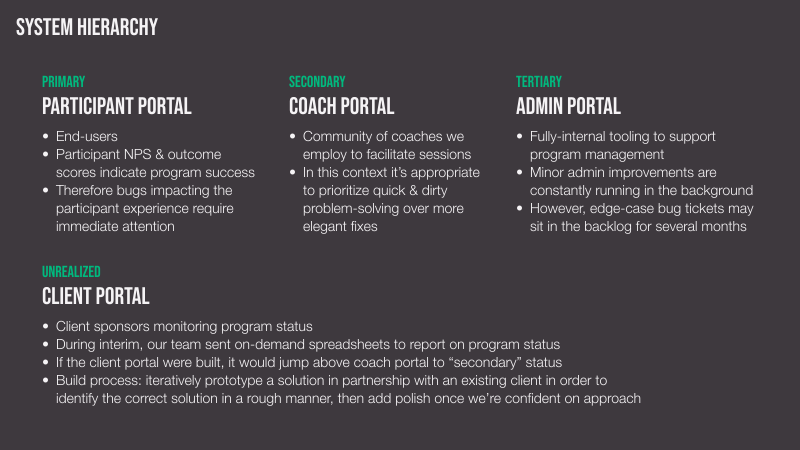
→ Participant Portal (Primary): These are our end-users. Participant NPS & outcome scores indicate the success of the program to the client-sponsor, therefore bugs impacting the participant experience require immediate attention.
→ Coach Portal (Secondary): This is the community of coaches who we employ to support our work. In this context it’s appropriate to prioritize responsiveness over solution polish.
→ Admin Portal (Tertiary): This is our fully-internal tooling to support program management. Minor admin improvements are constantly running in the background, but edge-case bug tickets may sit in the backlog for several months before becoming important enough to prioritize.
→ Reporting Dashboard (Unrealized): While we had an internal-facing reporting dashboard, we did not create a client-facing version. As a lean team, we sent on-demand spreadsheet reports as opposed to building a custom reporting solution. However, it was next on the roadmap. We would work with an existing client to iteratively prototype a solution, honing in on the true client needs prior to devoting significant design/development resources. If this had been built, it would have quickly jumped above coach portal to “secondary” status.
Feedback Channels
Building pathways to quantitative & qualitative data, in order to limit the impact of potential unknowns
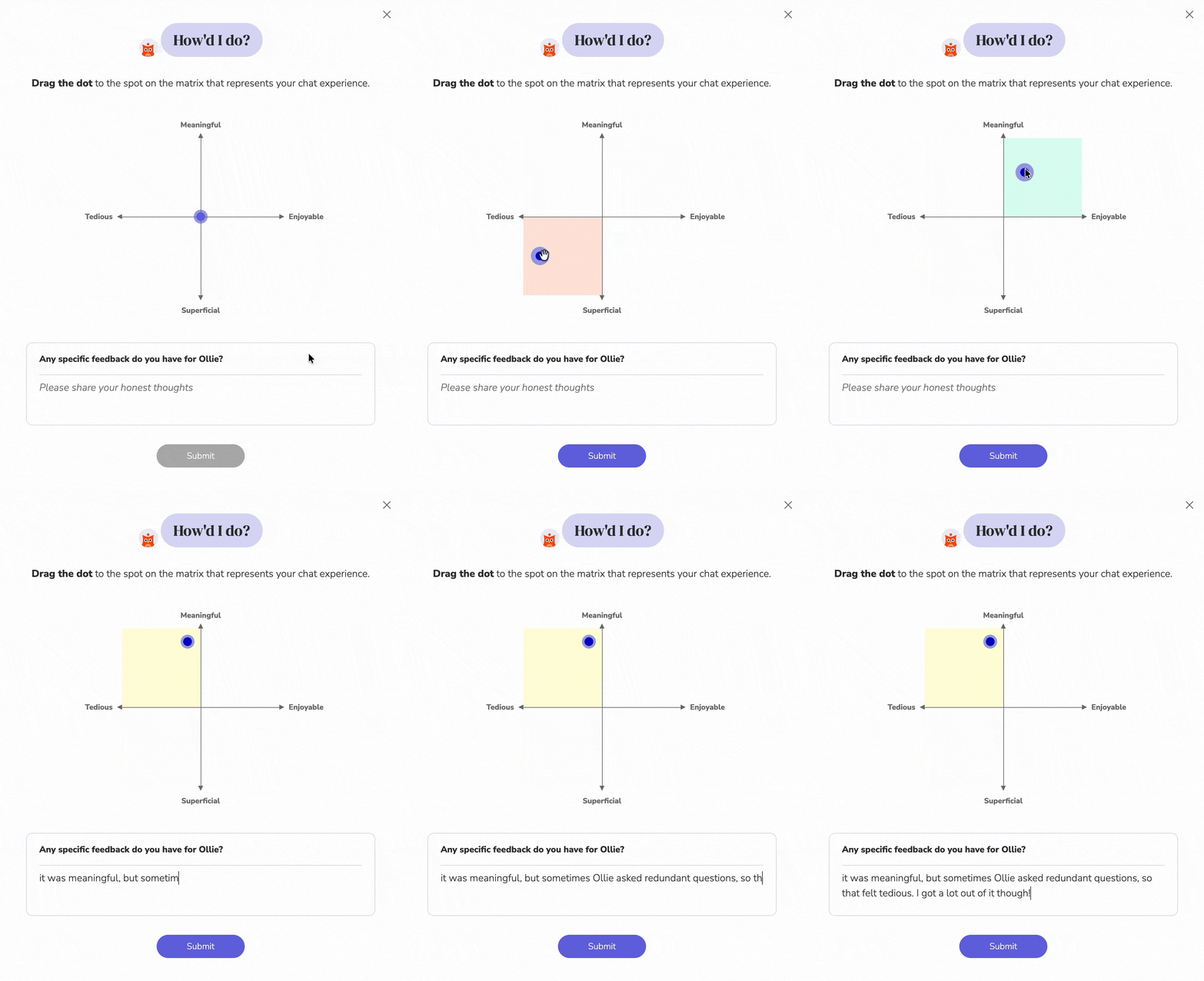
AI feedback matrix
As a leader I knew I couldn’t have all the answers, with that understanding it became incredibly important to establish meaningful feedback channels, formal and informal, to inform critical decisions.
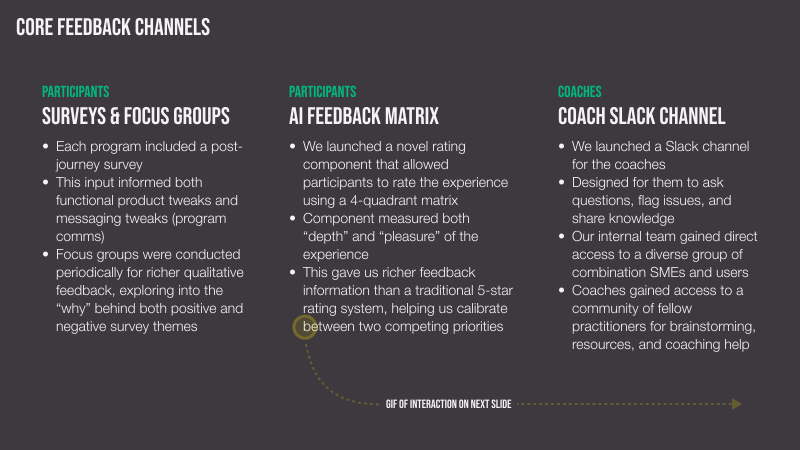
→ Coach Slack Channel: Bringing our coaches together in virtual space to ask questions, flag issues, and share knowledge. This creates a mutually beneficial feedback cycle where (1) we have direct access to diverse individuals who serve as both SMEs and users, and (2) coaches have a community of fellow practitioners to bounce ideas off of, share resources with, and request support from.
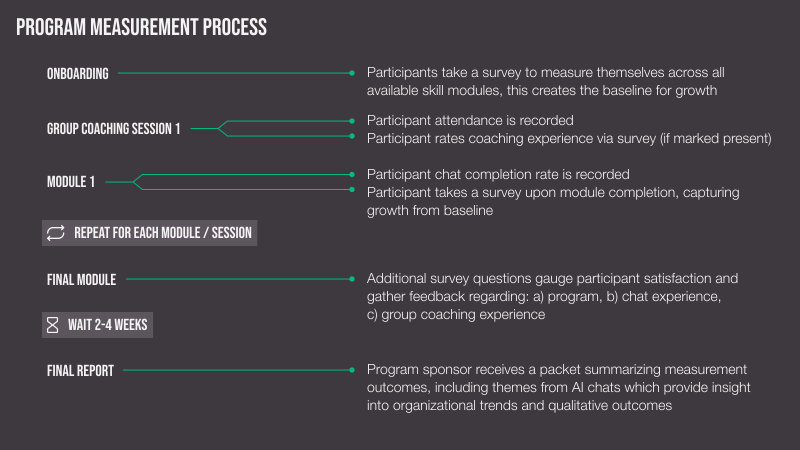
→ Surveys & Focus Groups: Each program included a post-journey survey that prompted participants to report on their learnings and overall experience. This input informed both functional product tweaks as well as higher-level messaging tweaks in service of product-experience communications. Focus groups were conducted periodically to explore qualitative feedback more deeply and identify experiential themes, drilling into the “why” behind positive and negative experiences participants reported.
→ AI Feedback Matrix: Rather than a more traditional review component that allows the participant to rate the experience on a scale of 1-5, we experimented with a novel approach to providing quantitative feedback that leverages a 4-quadrant matrix and measures both the “depth” and “pleasure” of the experience. This allowed us to keep tabs on where the interaction is excelling or flopping and recalibrate the AI prompt accordingly.
Prompt Engineering
Writing, testing, and iterating a head prompt to turn an LLM into a safe, tightly-scoped, developmental “coach”
Writing Frameworks
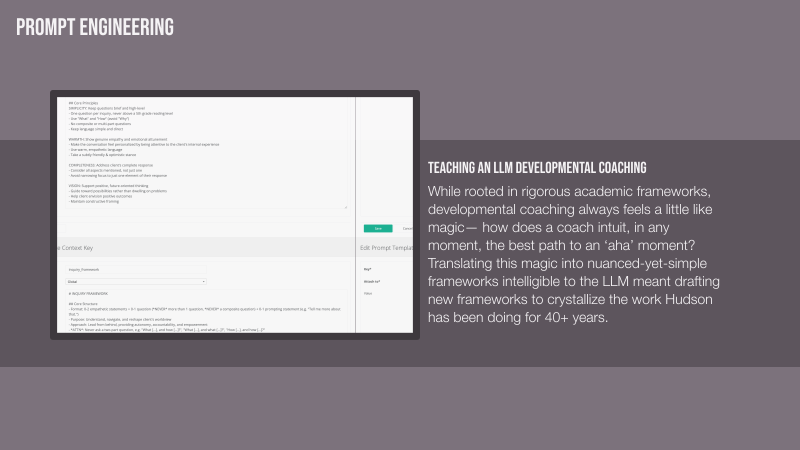
While rooted in rigorous academic frameworks, developmental coaching always feels a little like magic— how does a coach intuit, in any moment, the best path to an ‘aha’ moment? Translating this magic into nuanced-yet-simple frameworks intelligible to the LLM meant drafting new frameworks that crystallize the work Hudson has been doing for 40+ years.
Reviewing Chats
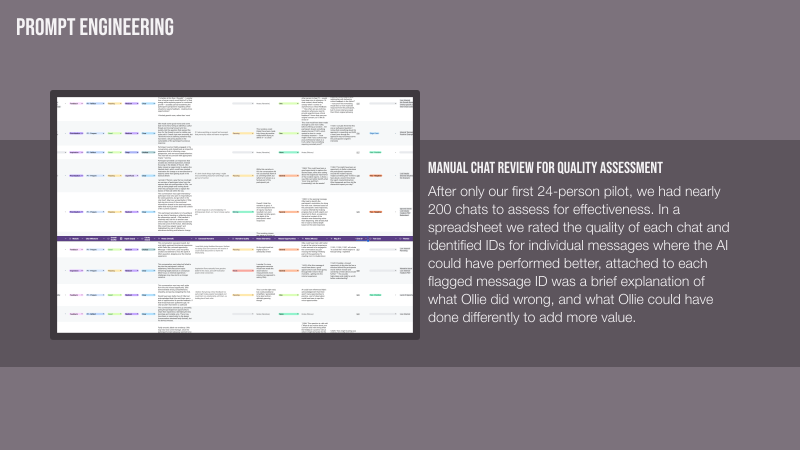
After only our first 24-person pilot, we had nearly 200 chats to assess for effectiveness. In a spreadsheet we rated the quality of each chat and identified IDs for individual messages where the AI could have performed better, attached to each flagged message ID was a brief explanation of what Ollie did wrong, and what Ollie could have done differently to add more value.
Identifying Themes & Opportunities
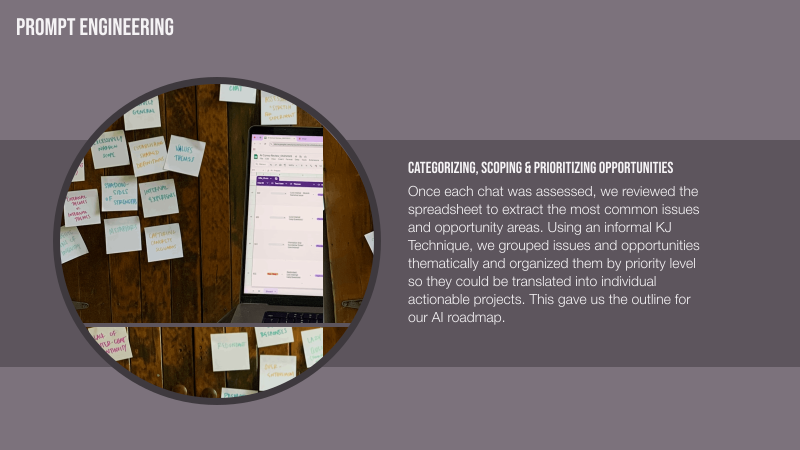
Once each chat was assessed, we reviewed the spreadsheet to extract the most common issues and opportunity areas. Using an informal KJ Technique, we grouped issues and opportunities thematically and organized them by priority level so they could be translated into individual actionable projects. This gave us the beginnings of our AI roadmap.
Collateral: Sales, Marketing & Program Management
Explaining a complex system in a simple and compelling way, for each key touchpoint
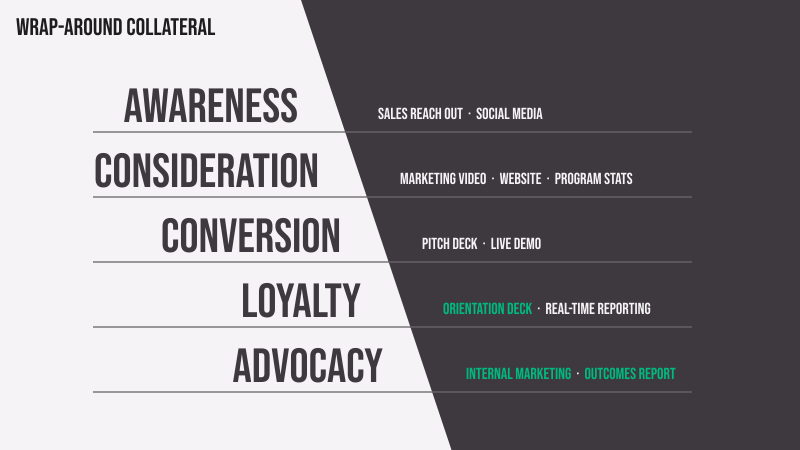
Our team identified critical gaps that could be closed by branded collateral. This started early in the funnel, with how we communicated the product’s experience & value to prospective clients, and spanned all the way to the close of the program, when we reported program outcomes back to the client sponsor. Browse a sample of the collateral designed below (exported as PDFs).
Internal Marketing / Participant Recruitment
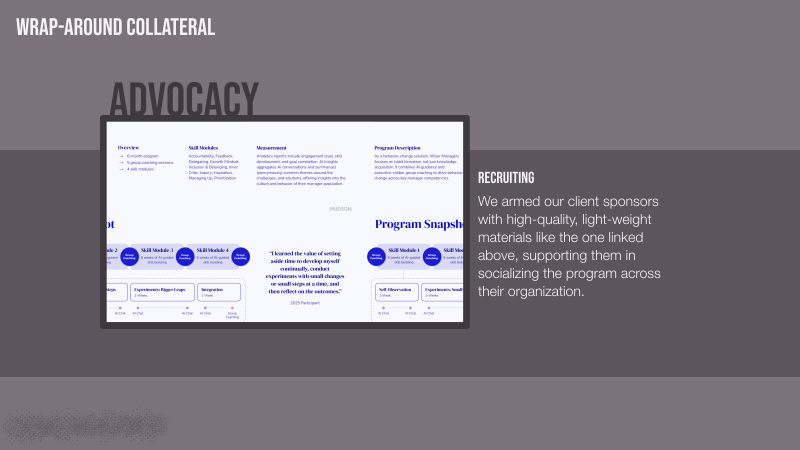
We armed our client sponsors with high-quality, light-weight materials like the one linked above, supporting them in socializing the program across their organization.
Participant Orientation
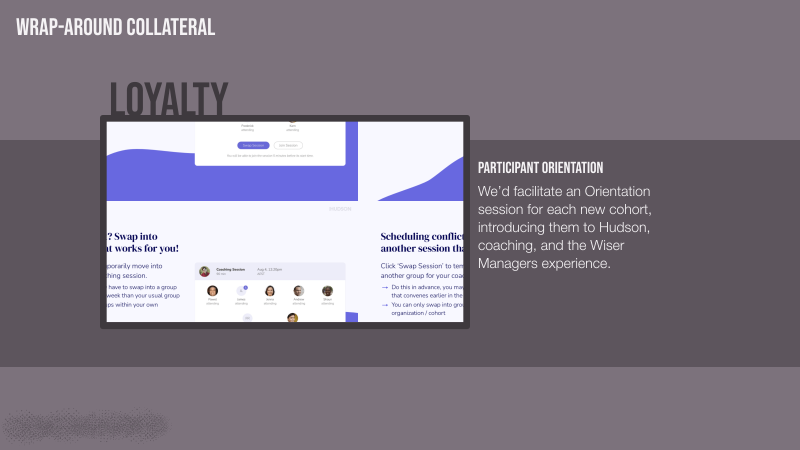
We’d facilitate an Orientation session for each new cohort, introducing them to Hudson, coaching, and the Wiser Managers experience.
Post-Program Report
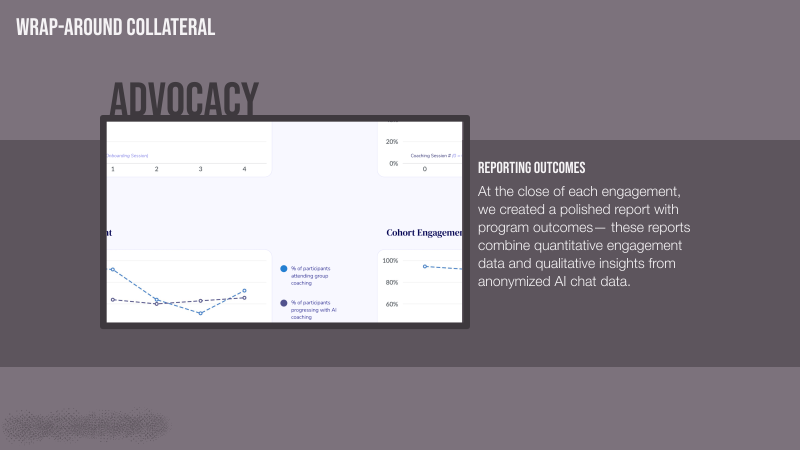
At the close of each engagement, we created a polished report with program outcomes— these reports combine quantitative engagement data and qualitative insights from anonymized AI chat data.